

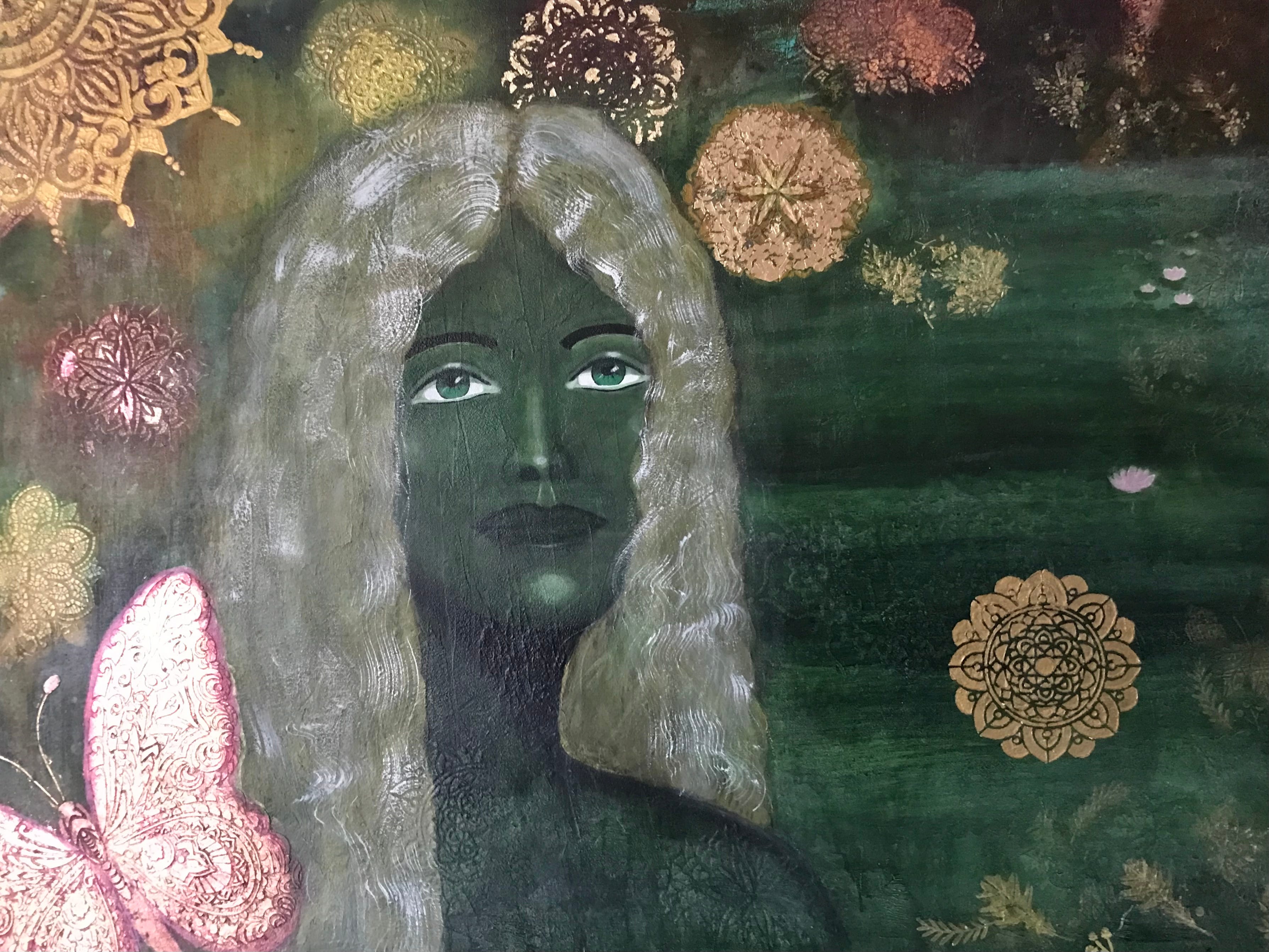
I was recently propelled down a fascinating rabbit hole(or should that read well hole?) when this divine beauty emerged from a painting. Who was she?
The answer to this question still eludes me. Usually, when I paint a deity, they reveal themselves, speaking to me of who they are. Not this time. The most obvious answer—a naiad1 of the Greek or Roman pantheon—just did not gel. She felt more local, more connected to the land where I currently reside, England. Or, more precisely, a small remote peninsula on the Essex coast.
It seems to me that many people alive today are not fortunate enough to be born into the culture and geographic location of their ancient forebearers, not within Western civilisation anyway. Most of us are mongrels of diverse extraction, cut off from our lineage, traditions, and the spirits of place. Perhaps this is why we suffer such ennui— bringing a deep yearning for a sense of “home” and the growing interest in paganism and Celtic mythology.
I was unfamiliar with Coventina, the wellspring water nymph, earth mother, and Romano-British goddess. That is until my painting catalysed an exploration of ancient Brythonic (ancient British) goddesses in an attempt to understand who the deity of my painting was. And although she has so far refused to reveal her heritage to me, I am pretty certain that the enchanting goddess of my painting is not the lovely Coventina.
Still, Coventina is worth knowing based on the contemporary accounts of those who have established a deep and meaningful connection with her, and perhaps her history can inform my own search. Modern day Druid Paul Sandover writes of a deep relationship he has developed with this enigmatic goddess, including a beautiful poem dedicated to her. 2
Usually pictured as a water nymph with water lilies and lying upon an oak leaf, this holy and revered earth mother goddess was actively worshipped between 200 BC and 400 AD. She represented abundance, renewal, new beginnings, purification, life cycles, gentle inspiration, prophecy, birthing, and healing.
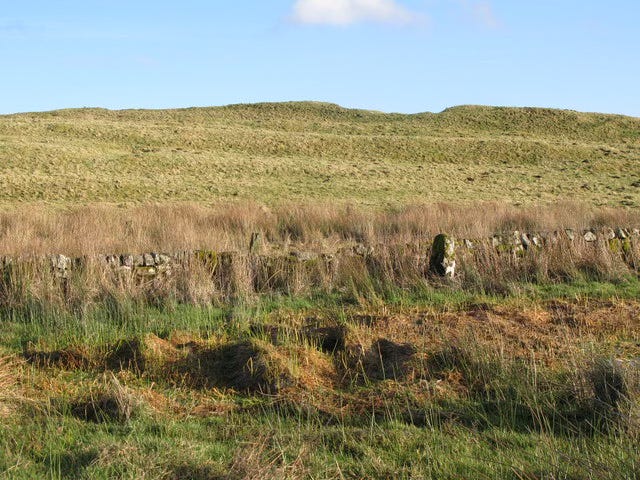
Though a similar deity is found in Spain and the former Goual, Coventina herself is not known in the wider Roman pantheon. Yet Roman soldiers garrisoned at Hadrian’s Wall revered this local goddess, finding her “most holy”. Finds at the well and adjacent temple include many votive offerings and dedications that highlight the relationship foreign soldiers had with this local deity. Throughout ancient Britain, there is much evidence of Roman soldiers and civilians worshipping the local deities with similar reverence. Miranda Aldhouse-Green in her book Sacared Britannia writes about many of these sites and related gods and goddesses, including the ‘Spirits of the Place’ as follows:3
“…. when solders were first drafted to a particular provincial location, they made it their business to ascertain who the local gods were and to worship them alongside their own deities.”
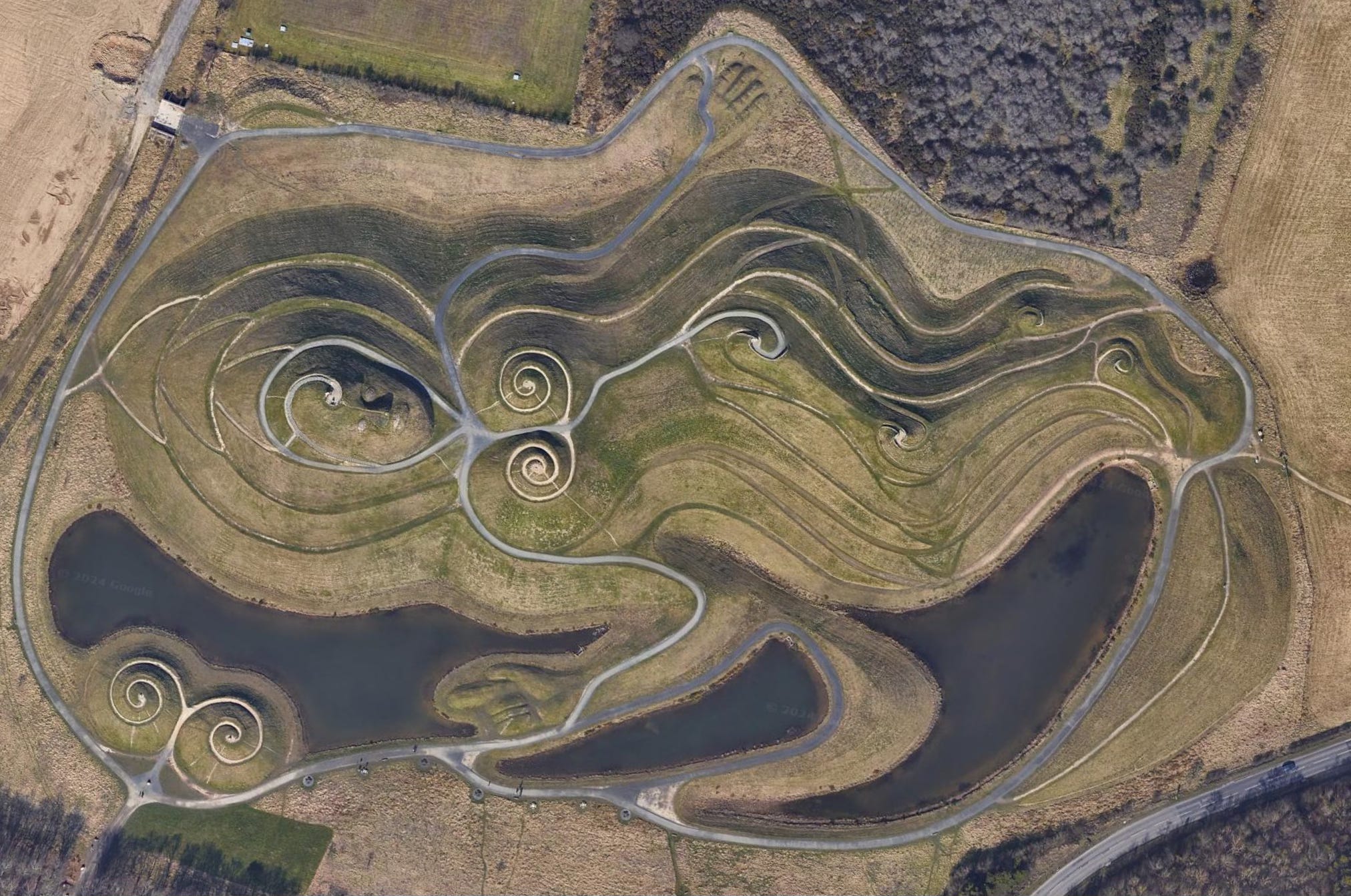
Just outside Cramlington, twenty-five miles east of Coventina’s wellspring and adjoining temple ruins at Carrawburgh, we find a vast land sculpture that opened in 2012 as a tourist attraction. We are interested in this modern-day engineering feat built as a reclamation project from an old open-surface mine because the sculpture's original name was Coventina. Unfortunately, some local busybodies took umbrage at our goddess's pagan roots and successfully petitioned for a name change—hence, Northumberlandia or, as she is known locally, Lady of the North. I don't believe it's an accident that the sculpture incorporates water elements; to me, she is the goddess, Coventina, back to claim her rightful place in our landscape and hearts.
My painting has awakened my yearning to establish a relationship with the spirits of my ancestors. It has initiated a journey to find roots and a sense of belonging.
Yet how does one embark on such an endeavour when we do not know who our ancestors were or where they lived? Perhaps it is right that, like the ancient Roman soldiers garrisoned far from home, we honour and connect with the ‘Spirit of the Place’ (Genius loci) where we find ourselves. Such a connection, I feel, can help bring us back into balance with all life and ourselves.
I am now on a journey to find my local water deity, a geographically specific and potentially powerful way to connect to the Great Mother through the ‘Spirit of the Place’—the place I live in today. In future posts, I will write more about this and my journey to find meaningful spiritual roots.
Naiad is the term ancient Greeks used to classify the nymph deities associated with freshwater bodies. The word comes from the Greek word naiein, which means “to flow.”The naiads were said to heal the sick, inspire poets, and bring fertility to crops and young women. In some accounts, their beautiful appearance resembled their watery domain.
Paul Sandover’s blog on his relationship with Coventina can be found at this link
Aldhouse-Green, M. Sacred Britannia: The Gods and Rituals of Roman Britian. London: Thames & Hudson, 2023.
Such a beautiful painting and listening to you talk about the goddess is fascinating. Looking forward to hearing more about her 🤩
Fascinating! Your painting is beautiful - I hope you can figure out who she is.